01Ambition
Growth without endless pursuit.
Ambition can move a life forward. But when every achievement immediately becomes the starting point for the next one, progress can quietly turn into permanent dissatisfaction.
Ambition, enoughness and the meaning of enough.
What if progress did not require us to remain permanently dissatisfied?
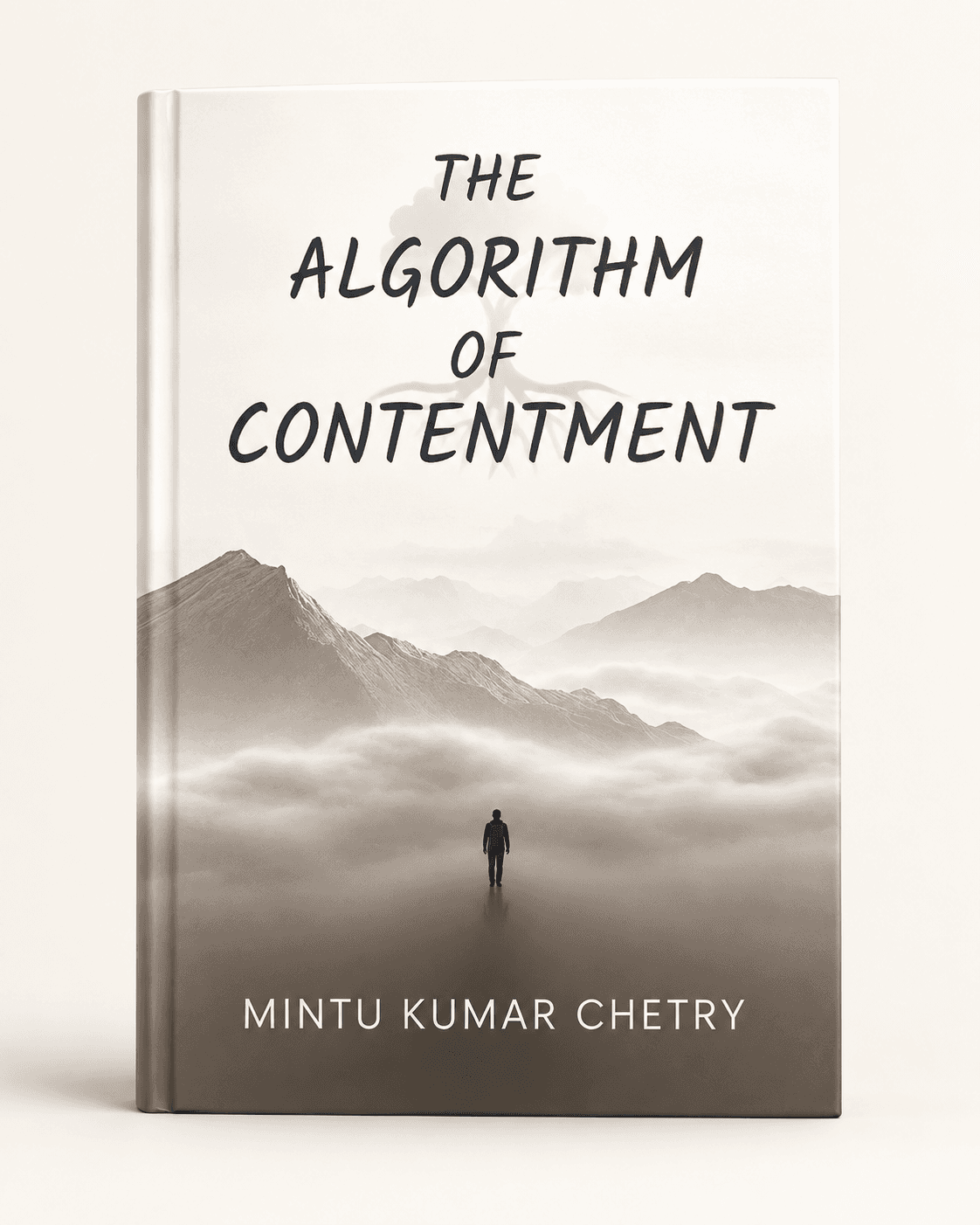
The Algorithm of Contentment explores the tension between ambition and enoughness — between the instinct to keep moving forward and the equally human need to know when life is already meaningful.
It is a reflection on success, identity, comparison, gratitude, purpose and the subtle ways in which achievement can become an endless pursuit. The book asks whether we can continue to grow without allowing growth itself to become the measure of our worth.
Ambition can move a life forward. But when every achievement immediately becomes the starting point for the next one, progress can quietly turn into permanent dissatisfaction.
Titles, milestones and recognition can become powerful identity anchors. The deeper question is what remains when external measures are removed.
Contentment is not the absence of aspiration. It is the ability to pursue what matters without making more the only acceptable destination.
The book does not argue against ambition. It asks for a different relationship with it — one in which gratitude and action can coexist, where progress remains possible without requiring perpetual comparison or dissatisfaction.
A life can keep moving forward without always needing to become more.
Perhaps contentment begins not when ambition disappears, but when ambition stops deciding whether the present is sufficient.